


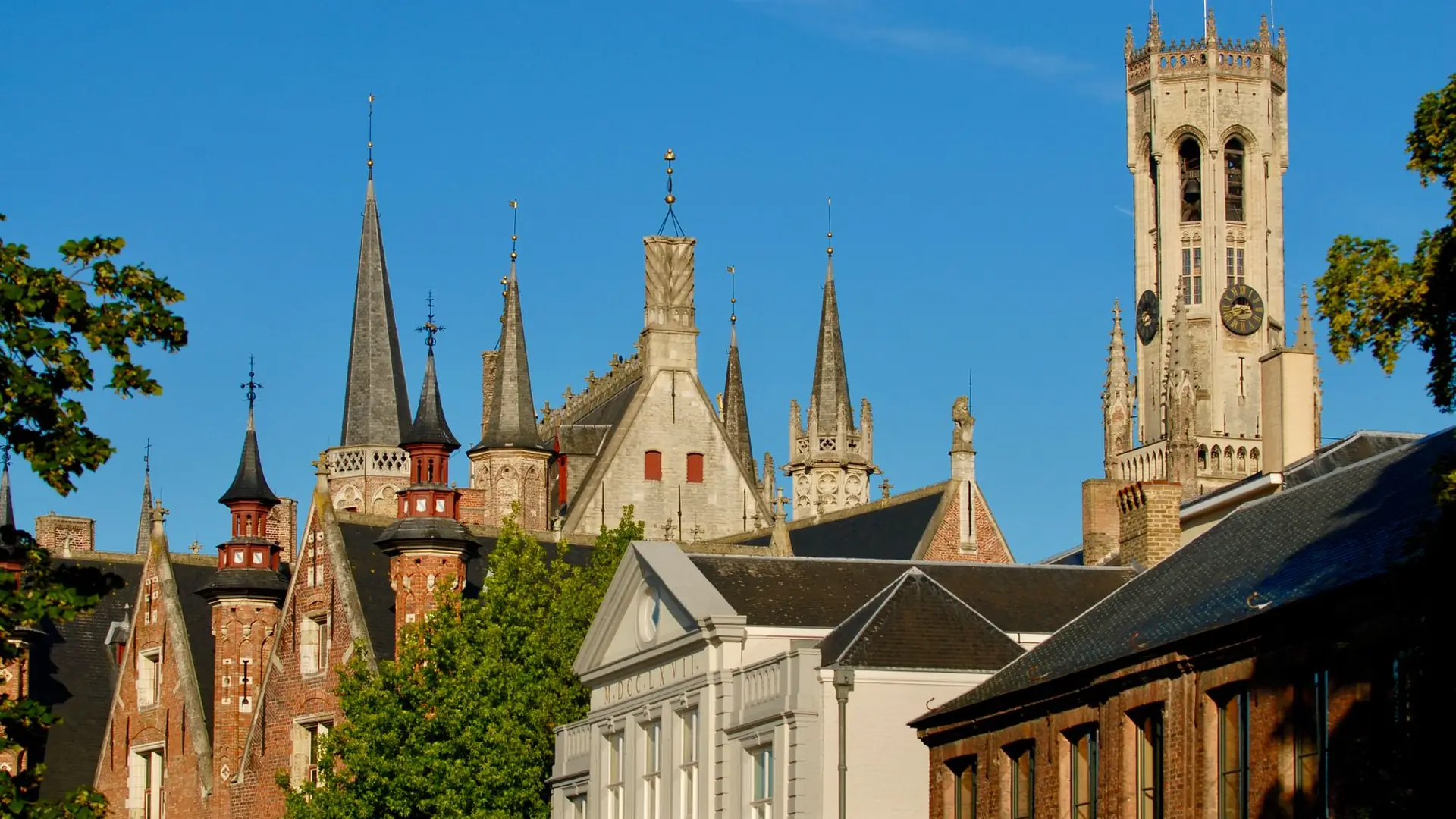
Host an au pair in Belgium
Legal obligations, agreement, declaration, contributions and salary: everything a family needs to know to host an au pair in Belgium.
Prepared by AuPair Connect — Compliance Team
Every legal, tax or safety detail in this content is verified by the AuPair Connect Compliance Team against official sources and dated.
Notice anything inaccurate or out of date? Help us keep this content up to date by writing to hello@aupairconnect.app.
Your host-family obligations in Belgium
Legal status(es)
Age 18–30 years
Hosting agreement (placement convention) — free movement, no work permit
Age 18–30 years
Type-B work permit (Region) + type-D visa (Office des étrangers) + A card
Visa
Required
Type D long-stay visa for third-country nationals — no long-stay visa for EU/EEA nationals (free movement)
Third-country national: the host family asks its Region for the authorisation to host the young au pair; the Region issues a type-B work permit through the municipality, then the young person applies for a type-D (long-stay) visa at the Belgian consulate, registers with the municipality within 8 days and receives an A card for a stay of up to 1 year. EU/EEA national: exempt from the work permit and from any occupation-authorisation formality (free movement), hosted under a private hosting agreement/convention.
Age
18–30 years
The age depends on the host Region (verified 2026-09-06): in Flanders, 18 to under 26 years; in Wallonia, 18 to 30 years; Brussels-Capital: verification ongoing (no published figure). These ranges apply to the regionalised “young au pair” scheme (third-country nationals on a type-B permit).
Working time
4 h/day
20 h/week
Educational-occupation ceilings common to the Regions (unless a regional rule says otherwise): light duties (childcare, small housework) limited to 4 h/day and 20 h/week in total, with one full weekly rest day. The total placement must not exceed 1 year (single renewal; depending on the Region, only one change of family). Above these ceilings the situation may be reclassified as domestic employment (employment contract).
Contract / Agreement
Hosting agreement / placement convention (unpaid cultural exchange) — Belgian hosting convention (not a salaried employment contract; an employment contract is presumed if the scheme conditions are not met)
Competent Region (Flanders / Brussels-Capital / Wallonia — occupation authorisation) + Office des étrangers / SPF Intérieur (residence, type-D visa) · The occupation-authorisation application is filed by the family before the young person arrives
Since 03/01/2019, third-country young au pairs stay under the old type-B work-permit procedure (outside the “single permit”). The placement is an unpaid cultural exchange: no additional job, no posted-worker status. The Regions qualify the stay as a hosting convention; the Office des étrangers may use the term “employment contract” in the occupation application: keep the “hosting agreement/convention” terminology.
Steps
- 1 Determine the competent Region (Flanders / Brussels-Capital / Wallonia) and the applicable scheme according to the young person's nationality (EU/EEA vs third-country) — Host family / young au pair
- 2 Third-country: the family applies to its Region for the authorisation to host the young au pair (Flanders: vlaanderen.be / Team arbeidskaarten; Wallonia: SPW Emploi; Brussels: be.brussels) — EU/EEA: no occupation-authorisation formality — Competent Region
- 3 Third-country: the Region issues the type-B work permit through the municipal administration, then the young person applies for the type-D (long-stay) visa at the Belgian consulate (documents: fee, original work permit, certificate of no criminal record, medical certificate) — Municipality / Office des étrangers (dofi.ibz.be)
- 4 On arrival: register with the municipality within 8 days, register in the foreigners register and receive the A card (stay ≤ 1 year) — Municipal administration
Salary / Pocket money
450.00–750.00 EUR/month
Monthly pocket money with board & lodging, depending on the host Region (verified 2026-09-06): ≥ €450/month in Flanders (monthly bank transfer, including inactive periods); ≥ €750/month in Wallonia; Brussels-Capital: verification ongoing, no published amount. The old single national range “€250–450” is obsolete (not regionalised) and is not retained. Unpaid cultural-exchange scheme.
Contributions
Host family (provides lodging, meals and pocket money) — no salaried-attachment body; the permit counterpart lies with the Regions (type-B permit)
Unpaid cultural exchange: no ONSS affiliation as a salaried worker
The au pair is not a classic salaried worker. If the hosting conditions are not met (amounts, tasks, additional job), the situation is presumed to be a domestic-worker employment contract, with the resulting charges for the family.
Tax advantages
No tax advantage specific to hosting a young au pair in Belgium
Pocket money with board & lodging outside salaried taxation under the unpaid scheme
The au pair stay is a cultural exchange compliant with the regional rules, distinct from a salaried employment contract; any claimed advantage must be checked against the official sources.
Official sources
- Service public fédéral Intérieur (IBZ/Dofi) — IBZ / Dofi — Office des étrangers : Jeune au pair · verified on 2026-09-06
- Service public fédéral Intérieur (IBZ/Dofi) — IBZ / Dofi — Office des étrangers : Permis unique · verified on 2026-09-06
- Gouvernement flamand (vlaanderen.be) — Employer un ressortissant étranger en Flandre — Jeune au pair · verified on 2026-09-06
- Service public de Wallonie — Emploi & Formation (SPW) — Devenir jeune au pair (Wallonie) — Emploi & Formation · verified on 2026-09-06
- ejustice.just.fgov.be (Législation belge) — Arrêté du Gouvernement wallon du 6 juin 2024 (admission au travail des travailleurs étrangers) — art. 61, 87 · verified on 2026-09-06
Spotted a mistake? Report it: the correction regenerates the site. Report an error on this block
Hosting an au pair in Belgium mixes two layers that often confuse families: a federal frame (stay, visa, residence permit) and the rules that govern working as a young au pair, set by the Region where your family lives - Flanders, Brussels-Capital or Wallonia. According to the au pair's nationality and your Region, the paperwork, age limits and pocket money really do change.
This English guide for host families condenses the same official, dated sources AuPair Connect verifies (2026-09-06: dofi.ibz.be - the Belgian Office des étrangers / Immigration Office, vlaanderen.be - Flemish government, emploi.wallonie.be - SPW Wallonia, be.brussels for Brussels) into what you, as the hosting family, must actually do. The figures repeat the verified 'Official data' block above so you can plan your budget and timeline.
Verified on
- Since 03/01/2019 a third-country national wanting to stay and work over 90 days in Belgium normally needs the single 'permis unique'; the Immigration Office keeps young au pairs explicitly in the older type-B work-permit procedure. (dofi.ibz.be - Permis unique, verified 2026-09-06)
- Non-EU/EEA au pair: the host family asks its Region for the 'authorisation to employ' (autorisation d'occupation); the Region issues a type-B work permit via the municipality, then the au pair applies for a long-stay D visa, registers at the municipality within 8 days and receives a residence card (carte A) for a stay up to 1 year. (dofi.ibz.be - Jeune au pair, verified 2026-09-06)
- EU/EEA au pair: no work permit, and the host family has no employment-authorisation step to file (free movement). Wallonia makes this explicit. (emploi.wallonie.be, verified 2026-09-06)
- Age and pocket money depend on the Region: Flanders 18 to under 26 years and at least €450/month; Wallonia 18 to 30 years and at least €750/month. (vlaanderen.be / emploi.wallonie.be, verified 2026-09-06)
- A Belgian au pair placement is a CULTURAL exchange, not salaried work: no extra job and no secondment (detached-worker) status; if the conditions are not met the arrangement can be reclassified as a domestic employment contract with the costs that follow. (dofi.ibz.be + Regions, verified 2026-09-06)
First, does your intended au pair need a Belgian work permit?
In brief
Nationality is the decisive variable. For an EU/EEA au pair no work permit and no host 'authorisation to employ' is needed (free movement). For a non-EU/EEA au pair, the host family applies to its Region for authorisation, a type-B permit is issued via the municipality, then the au pair applies for a long-stay D visa.
Answer the nationality question first, because it changes everything. If the young person is a national of the European Union or the European Economic Area, they can be hosted as an au pair under free movement: no Type-B work permit and, as the host family, you file no 'authorisation to employ' at all. Wallonia's administration states this explicitly.
If the au pair is a national of a non-EU/EEA country, the host family drives the process: you apply to the authority of your Region (where you live) to 'occupy' the young au pair. When granted, that Region delivers a work permit - in practice a type-B permit handled through the municipality - which is then transmitted to the young person, who applies for a D visa for their long stay. Understanding this role split (you make the employment application; the au pair files the visa) avoids the most common online confusion about Belgium.
The two-step permit: your Region, then the D visa - and the money that goes with it
In brief
Non-EU/EEA hosting = Region authorisation to employ + type-B work permit via your municipality + the au pair's D visa + municipal registration within 8 days (carte A). Residence is capped at 1 year. Allow several months and budget for the pocket money and insurance your Region requires.
Plan several months ahead if your au pair is non-EU/EEA. First, the Regional step: the host family asks its Region - Flanders, Brussels-Capital or Wallonia, whichever covers your home - for the authorisation to employ the young au pair. The Region issues the work permit to the family through the municipal administration, and the family forwards it. The request generally includes a medical certificate and the hosting/agreement document.
Second, the federal step: once allowed to work, the au pair applies for a national long-stay visa (D visa, for stays over 90 days) at the competent Belgian embassy or consulate. The authorities list among the required pieces the paid fee, the original work permit, a police/criminal-record certificate (casier judiciaire) and a medical certificate.
Finally, after arrival: the au pair registers at the municipality within 8 days, is entered in the foreigners register and receives a residence card (carte A). The residence authorisation is capped - up to 1 year. As host you also provide a private room, cover insurance and pay the pocket money required by your Region.
Flanders, Wallonia or Brussels - where the rules actually differ
In brief
Flanders: au pair 18 to under 26, at least €450/month. Wallonia: 18-30, at least €750/month plus language courses and possible home checks. Brussels-Capital: competence confirmed but we publish no figure until an official page is verified. Common caps: 4 h/day and 20 h/week, max 1 year.
Access to the labour market is regional in Belgium, and the Regional rules are where uncertainty usually lives. The general principle (confirmed by the Immigration Office) holds everywhere: you ask for the work authorisation from the Region where your family resides, while the stay itself stays federal (Office des étrangers / SPF Intérieur).
In Flanders (vlaanderen.be - Migration Economic Service, 'Team arbeidskaarten', Department of Work & Social Economy), a non-EU/EEA young au pair must be at least 18 and under 26 at the time the permit is granted, and pocket money must be at least €450/month, paid by monthly bank transfer (including inactive periods). The permits go through the Region (Team arbeidskaarten) then the municipality, not through VDAB.
In Wallonia (SPW - Direction de l'Emploi et des Permis de travail, based on the Walloon Government Decree of 6 June 2024, arts. 61 and 87), the age range is 18-30 and pocket money at least €750/month; Wallonia also requires the au pair to follow language courses (proof to SPW) and may carry out unannounced home checks.
In Brussels-Capital (be.brussels / Actiris) the Regional competence is confirmed, but - as of our 2026-09-06 check - we could not stabilise an official page stating exact age and pocket-money figures, so we deliberately publish no Brussels figure until that is resolved. If you live in Brussels, check directly with be.brussels or Actiris before starting.
Unless a Region explicitly says otherwise, the common teaching-workload caps apply everywhere: no more than 4 hours a day and 20 hours a week of light tasks, one full rest day each week, and a total placement not exceeding 1 year (a single renewable extension, and generally one change of host family).
Before you host: tasks, paperwork and the traps that cost families
In brief
Hosting stays an educational, non-salaried exchange: light tasks up to 4 h/day and 20 h/week, one full weekly rest day, maximum 1 year, no extra job, no seconded-worker status. Break the rules and Belgian authorities can reclassify it as domestic employment with social charges - draw up a hosting agreement, not an employment contract.
Keep the placement clearly educational. Kids and light housework may be asked - up to 4 hours a day and 20 hours a week, with a full weekly rest day - but childcare tasks must never become the main point of the stay. That boundary is what keeps Belgium's au pair scheme a cultural exchange.
Watch the wording of the framework. The au pair stay is legally NOT salaried work: the young person cannot take another job, and a detached-worker status is not allowed in this frame. Terminology is confusing - the Immigration Office can use the words 'employment contract' on the occupancy application, while the Regions describe the stay as a hosting agreement (accord/convention d'accueil). The safe route is an explicit hosting agreement, never a salaried-employment contract. If the conditions are broken (money, tasks, extra job), the situation can be presumed to be a domestic employment contract, bringing social charges onto your family.
Keep your proof trail: the hosting agreement, the work permit, the visa and residence card, health/accident/repatriation insurance documents, records of the monthly pocket-money transfers and a written log of hours worked and free time. In a control, these prove your placement matches the Regional rules and protect you and the au pair.
Frequently asked questions
Does an au pair from the EU need a Belgian work permit?
My au pair is from a non-EU country. How do I host them in Belgium?
How much pocket money do I pay an au pair in Belgium?
What ages are accepted to host an au pair in Belgium?
Can I ask my au pair to do 8 hours of childcare a day?
Host an au pair in another destination
Host in France
Family guide
Host in Switzerland
Family guide
Host in Canada
Family guide
Host in Luxembourg
Family guide
Host in Monaco
Family guide

Host in Germany
Family guide

Host in Spain
Family guide

Host in Italy
Family guide

Host in Portugal
Family guide
Host in Netherlands
Family guide
Host in Denmark
Family guide
Ready to host?
Publish your offer, match with profiles with a verified contact point and sign a contract compliant with local regulations. of Belgium.
Hosting an au pair in Belgium cities
Verified city pages for hosting an au pair in Belgium.
Keep reading
Get your guide 💌
Receive this guide by email
The complete handbook, ready to share with your family or au pair. Sent for free, no commitment.
One email, no spam. By reading our terms of use you accept our communications.
Finding an au pair and how it actually works
The two reference guides for the au pair lifecycle: how to search safely, and how a placement really works.
Practical guides
Everyday life guides, French FLE classes and honest comparisons to prepare your stay.
Not sure what an au pair exactly is? What an au pair is: definition, role & rules .