



French classes for au pairs in Dijon, at the CIEF of Université Bourgogne Europe
A university centre on the Montmuzard campus: 17 to 20 hours of French language and culture a week, leading to a real diploma (the DUEF) or to the DELF and the DALF. A rigorous daytime timetable, ideal when the host children are at school all day.
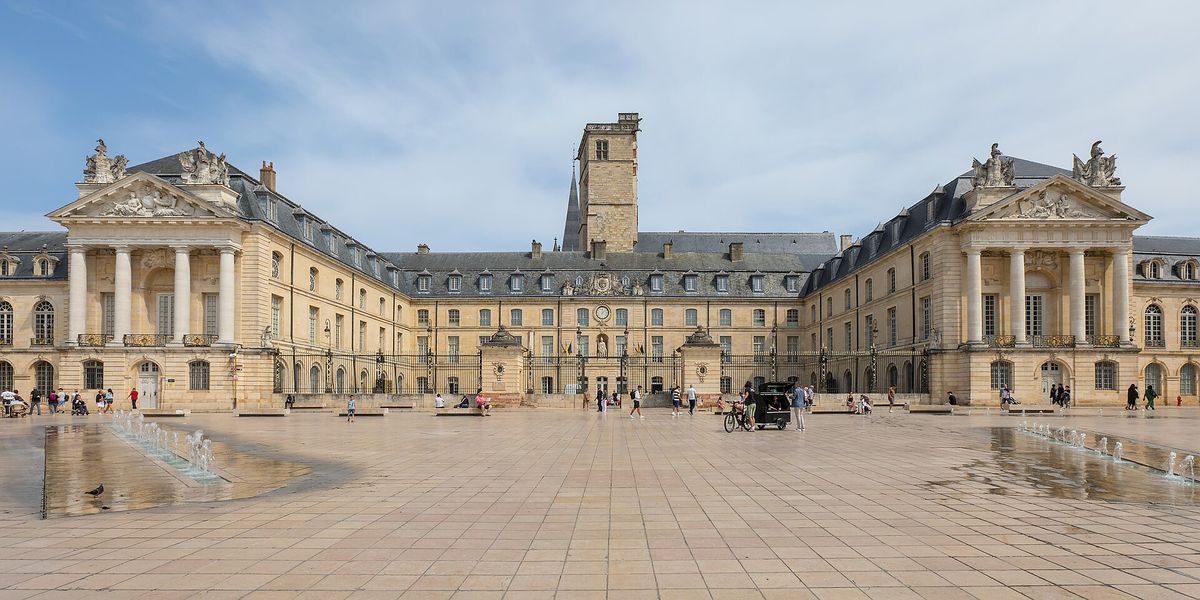
Photo:Palais des Ducs et des États de Bourgogne, Dijon, Benjamin Smith (CC BY-SA 4.0, Wikimedia Commons). The CIEF is on the Montmuzard campus.
Quick answer
Au pair in Dijon? The CIEF, the International Centre for French Studies of Université Bourgogne Europe, teaches 17 to 20 hours of French language and culture a week, in the daytime. A semester costs €1,515 (27 September 2027 or 31 January 2028), a 4- or 8-week session €760 or €1,280 (October or February), a summer course of 2 to 12 weeks €505 to €1,600. Levels A1 to C2 with the DUEF diploma, an official DELF and DALF centre, on the Montmuzard campus, by tram T1.
From the CIEF’s 2027–2028 fee grid and the school. No au pair discount has been agreed: none is shown.
 CIEF · DIJON
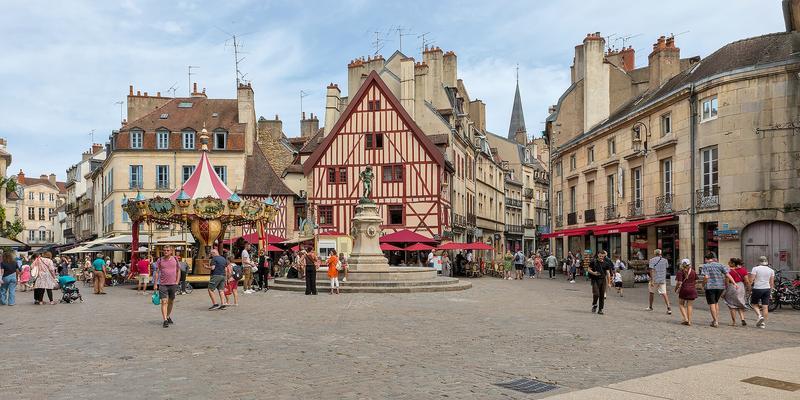
A university centre, on the Montmuzard campus
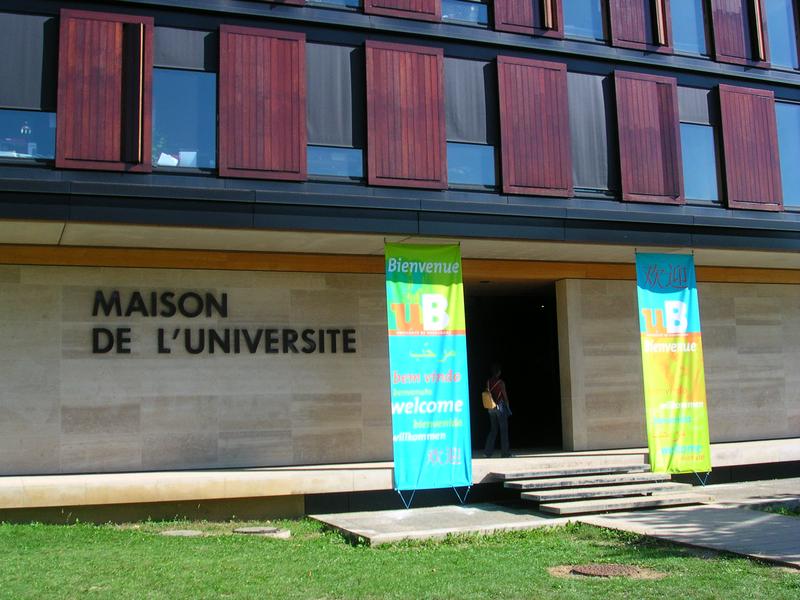
The CIEF, the Centre International d’Études Françaises, is a historic centre of Université Bourgogne Europe in Dijon and a member of ADCUEFE, the network of university French centres. It awards the Diplômes Universitaires d’Études Françaises (DUEF) from A1 to C2 and is an official exam centre for the DELF and the DALF. Its office is at the Maison de l’Université, Esplanade Érasme, in the heart of the Montmuzard campus.
- Since
- 1901
- A historic centre founded in 1901 within Université Bourgogne Europe in Dijon (the school).
- Where
- Esplanade Érasme
- Maison de l’Université, at the heart of the Montmuzard campus. Tram T1: Érasme, Université or Grésilles (the school).
- Diplomas
- DUEF
- Obtained on the fall and spring semesters (A1 to C2); exams in the final week of the semester (the school).
- Network
- ADCUEFE
- A member of ADCUEFE, the network of university French-as-a-foreign-language centres, “Campus FLE” (the school).
- Exams on site
- DELF/DALF
- Official centre: 2 sessions a year, in March or May and in December (A2–C1; CIEF fees from €75 to €168).
- Campus life
- BU · CROUS
- Libraries, CROUS restaurants, culture and sport: the CVEC (compulsory for fall and spring semesters only) opens all services.

Your contact at the school
The CIEF team
The team answers enrolment questions: [email protected] (+33 3 80 39 35 60). The CIEF has no au-pair-only course and teaches 17 to 20 hours a week: this page presents exactly that, as a strength. Au pairs already live with their host family, so it is about classes only.
Excellence, with the day it asks for
Many host families in Dijon and Burgundy have children at school all day. For an au pair in that situation, 17 to 20 hours a week is a chance: a complete course, taught by a university, that ends in a diploma. It is also a real commitment: it suits an au pair whose children are at school in the daytime and who comes to learn French seriously.
A real university timetable, for days when the children are at school
The CIEF teaches 17 to 20 hours a week. It has no au-pair-only course and no evening course, and says so. If the children are at school all day, that is a rare chance: a complete course, not a few hours squeezed in.
A diploma at the end, not just a certificate
The semesters prepare for the DUEF, a university diploma from A1 to C2. The CIEF is also an official DELF and DALF centre, so the same stay can end with an exam that is recognised everywhere.
A campus, not just a classroom
Class takes place at the university, among students from the whole world: libraries, CROUS restaurants, culture and sport, and the tram to the city centre in a few stops.
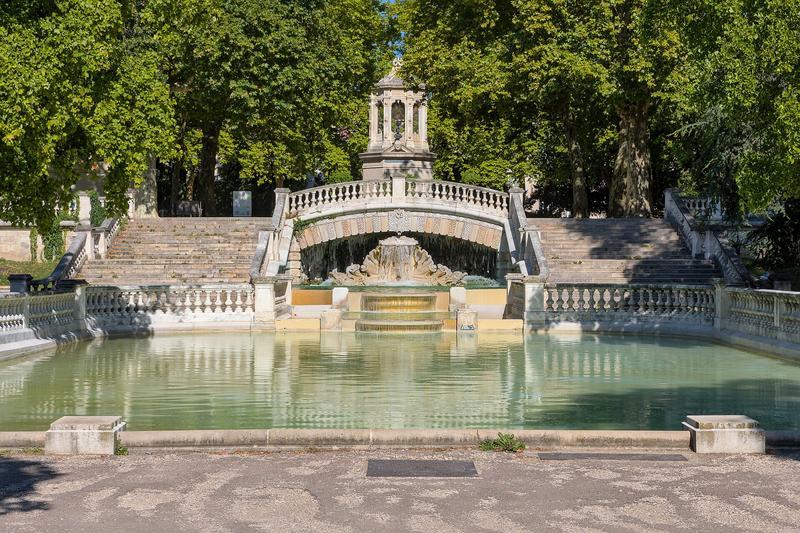
After class: French in the Jardin Darcy
The Jardin Darcy and its polar bear are in the city centre, on the tram network. A walk with the children, a pastry order: every outing is practice.
The CIEF’s real programme, in three formulas
The CIEF does not sell a course made for au pairs: it opens its university timetable to them, 17 to 20 hours a week. You choose the length: a semester, an intensive session of 4 or 8 weeks, or a summer course of 2 to 12 weeks.
| Semester courses | Modular sessions | Summer courses | |
|---|---|---|---|
| Format | French language and culture, DUEF preparation, levels A1–C2 | Intensive sessions of 4 or 8 weeks, with the same teaching | General French and culture in summer, from 2 to 12 weeks |
| When | Daytime timetable by level; 1 day off a week when possible | Daytime timetable by level; 1 day off a week when possible | Example timetable: 9:00–13:00 / 15:00 (all finished by 15:00) |
| Rhythm | 17–20 h a week | 17–20 h a week | 20 h a week (example: 17 h language + 3 h culture) |
| Start | 27 Sep 2027 and 31 Jan 2028 | 4 Oct 2027 and 7 Feb 2028 | 31 May, 28 June, 26 July 2027 |
| Fee | €1,515 (registration €450 + course €1,065) + CVEC | €760 for 4 weeks, €1,280 for 8 (no CVEC) | From €505 (2 weeks) to €1,600 (12, no CVEC) |
| For you if… | The children are at school all day, and you want the DUEF diploma. | You arrive in October or February, or want a shorter commitment. | You arrive for the summer, or stay a few weeks. |
In colour: the formula that gives the full DUEF diploma (fall and spring semesters only). Fees and dates from the CIEF’s 2027–2028 fee grid, checked on 17 November 2026. What the CIEF does not have: a course made only for au pairs and an evening course, and this page invents neither.
Your week, three examples
17 to 20 hours of class sit next to up to 25 hours of childcare. Three examples of a week that works when the children are at school: all class finished before the pick-up at 16:30, one full day off, Sunday free.
ChildcareCIEF classYour own time
17–20 h of class a week25 h childcare in each example, the French capSunday free every week
The 20 h summer plan is based on the CIEF’s sample timetable (June to September). From September to May, the timetable depends on the student’s level and class, with one free day per week whenever possible. Childcare hours are examples within 5 hours a day and 25 hours a week, with at least one day off (class time is not childcare time).
Your French, level by level
From a jar of mustard to thinking in French. Next to each level, a sentence you could really say in Dijon, and what the level means. The DUEF runs from A1, for complete beginners, to C2.
- A1
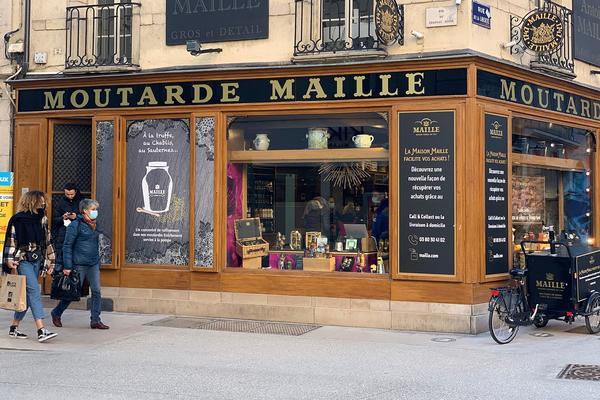 From zero: in the mustard shopBonjour, un pot de moutarde à l’ancienne, s’il vous plaît.Hello, a jar of grainy mustard, please.
Introduce yourself, order, ask the way
- A2
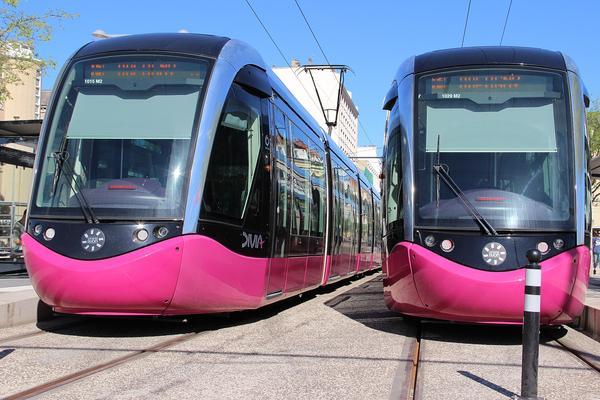 On tram T1 with the childrenOn prend le tram T1 et on descend à Érasme. Tenez bien la barre !We take tram T1 and get off at Érasme. Hold on tight!
Talk about routines, plans and the past
- B1
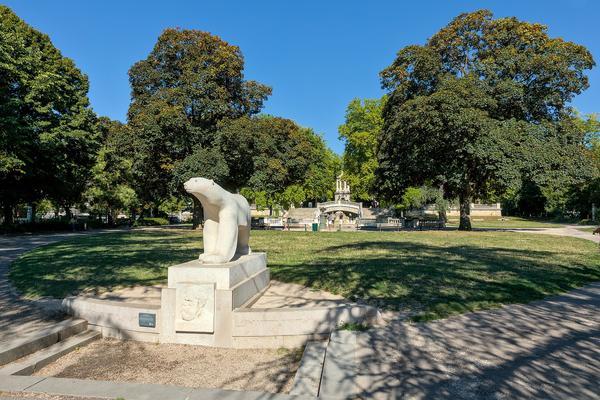 Telling the parents about WednesdayMercredi, on est allés au jardin Darcy et les enfants ont voulu grimper sur l’ours blanc.On Wednesday we went to the Jardin Darcy and the children wanted to climb the white bear.
Cope with most situations, give opinions
- B2
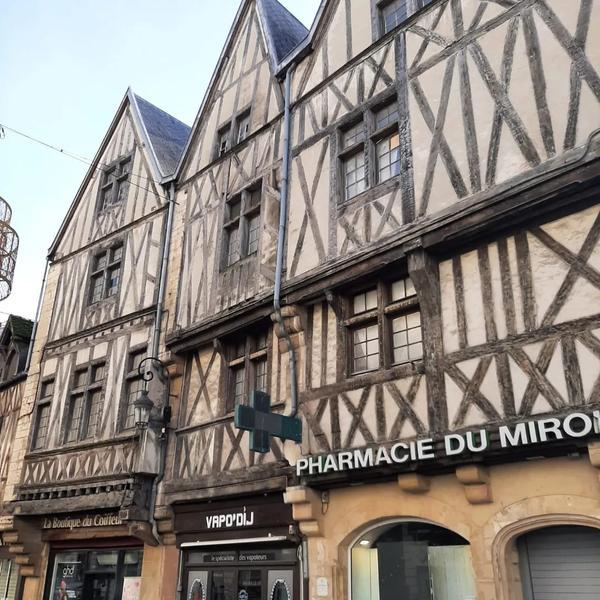 After a Sunday in the old townBien que je ne sois à Dijon que depuis six mois, je me perds encore dans les ruelles à colombages.Although I have only been in Dijon six months, I still get lost in the half-timbered lanes.
Follow a discussion, write clear texts
- C1
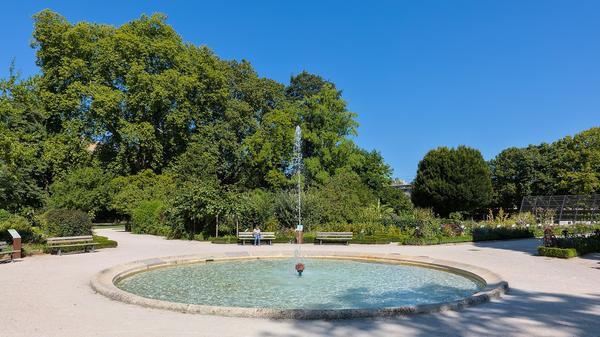 Looking back, in the Jardin de l’ArquebuseSi j’avais su que les enfants adoreraient le jardin de l’Arquebuse, j’y serais allée plus tôt.Had I known the children would love the Jardin de l’Arquebuse, I would have gone sooner.
Express yourself fluently and precisely
- C2
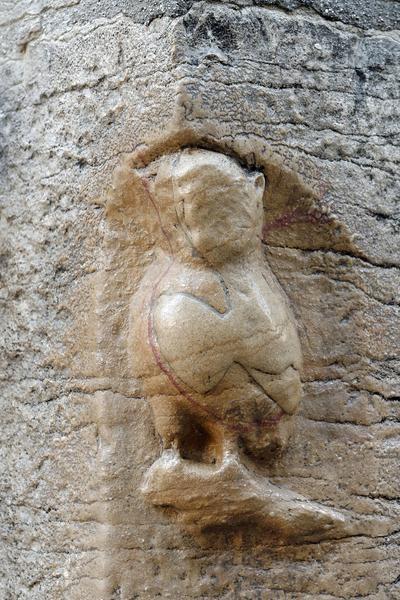 At the owl, thinking in FrenchAussi paradoxal que cela paraisse, c’est en cessant de traduire que j’ai enfin commencé à penser en français.Paradoxical as it may seem, it was by ceasing to translate that I finally began to think in French.
Master the language with nuance, the DALF level
What a CIEF course gives you, in three points
An official enrolment certificate
Issued by the CIEF on receipt of your file and the registration fee (€450 for a semester, €300 for a session). The balance is paid on arrival in Dijon.
Campus services
The CVEC contribution (compulsory for fall and spring semesters only) opens the libraries, the CROUS restaurants and the cultural and sports activities of the university in Dijon.
A diploma, or an exam
Fall and spring semesters lead to the DUEF (exams in the final week); the CIEF is also an official centre for the DELF and DALF (2 sessions/year: March or May, and December).
Levels A1 to C2 as in the Common European Framework, matching the DUEF levels the CIEF lists. The descriptions summarise the framework and the French sentences are AuPair Connect examples, not the CIEF’s material.
What it costs: registration plus course
One fee per formula, the same for everyone: €1,515 for a semester, €760 or €1,280 for a 4- or 8-week session, €505 to €1,600 for a summer course. The registration fee is included in each total. No au pair rate has been agreed, so none is shown.
- Semester€1,515fall or spring · 17–20 h a weekregistration included
- 4-week session€760Oct or Feb · 17–20 h a weekcourse €5.75–€6.76 an hour
- 8-week session€1,280Oct or Feb · 17–20 h a weekcourse €6.12–€7.21 an hour
- Summer coursefrom €5052 to 12 weeks · 3 start datesup to €1,600
- Good to know about the price
- €450 · €300registration
- ≈ €105CVEC a year
- On arrivalbalance in Dijon
- €0commission
| Dates | Registration | Course | Total | |
|---|---|---|---|---|
| Semester · fall | 27 Sep 2027 – 21 Jan 2028 | €450 | €1,065 | €1,515 |
| Semester · spring | 31 Jan 2028 – 26 May 2028 | €450 | €1,065 | €1,515 |
| 4 weeks | 4–29 Oct 2027 · 7 Feb – 3 Mar 2028 | €300 | €460 | €760 |
| 8 weeks | 4 Oct – 26 Nov 2027 · 7 Feb – 31 Mar 2028 | €300 | €980 | €1,280 |
| 2 weeks | 3 weeks | 4 weeks | 6 weeks | 8 weeks | 12 weeks | |
|---|---|---|---|---|---|---|
| Registration | €300 | €300 | €300 | €300 | €300 | €300 |
| Course | €205 | €325 | €460 | €735 | €980 | €1,300 |
| Total | €505 | €625 | €760 | €1,035 | €1,280 | €1,600 |
An example: a fall semester and the CVEC come to about €1,620
The amounts are the CIEF’s; the sum is ours and the bar is not to scale. The CVEC is an indicative yearly amount. A spring semester comes to the same price.
Amounts from the CIEF’s 2027–2028 fee grid, checked on 17 November 2026. The hourly figures are our sums, if 17 to 20 hours are taught every week. The CVEC (about €105 a year, indicative) applies only to the fall and spring semesters.
How many class hours, and exams on site
- 4 weeks × 17–20 h68–80 h
- 8 weeks × 17–20 h136–160 h
- DUEFA1 to C2. Obtained on the fall and spring semesters only; final exams are held during the last week of the semester.
- DELFA2 to B2. 2 sessions a year (March or May, and December). CIEF/UBE student rate: €75 (A2), €119 (B1, B2) — e.g. March 2027 session.
- DALFC1 to C2. 2 sessions a year (March or May, and December). CIEF/UBE student rate: €168 for DALF C1 (€210 external).
2027–2028: three ways in, all year
Summer courses start on 31 May, 28 June and 26 July 2027. The 4- and 8-week sessions start on 4 October 2027 and 7 February 2028. The semesters run from 27 September 2027 to 21 January 2028 and from 31 January to 26 May 2028. DELF and DALF run twice a year, in March or May and in December.
Semesters and sessions (dates listed)Closed day (weekday)
The four dates to know
- 131 May – 20 AugSummer courses2 to 12 weeksstarts 31 May · 28 Jun · 26 Jul14 Jul (14 July)
- 227 Sep – 21 JanFall semester€1,515short sessions from 4 Oct1 Nov (All Saints)11 Nov (Armistice)
- 331 Jan – 26 MaySpring semester€1,515short sessions from 7 Feb1 May (1 May)8 May (8 May)25 May (Ascension)
- 42 sessions / yearDELF · DALFMarch or May · December
Dates from the CIEF’s 2027–2028 fee grid and DELF/DALF calendar, checked on 17 November 2026. A semester window runs 17 calendar weeks, with DUEF exams in the final week; university Christmas and spring breaks follow the official university calendar.
How to get started
- Write to the CIEFWrite to the CIEF team: [email protected] (or call +33 3 80 39 35 60). Say you are an au pair, which formula you would like (semester, 4- or 8-week session, summer course) and the start date.
- Send the file and pay the registration feeRegistration costs €450 for a semester and €300 for a session or a summer course. The CIEF then issues an official enrolment certificate, on receipt of the file and of the registration fee.
- Pay the balance in DijonThe balance of the course fee is payable on arrival in Dijon. At the end of a session, you can re-enrol for the next one. The CVEC contribution is compulsory for fall and spring semesters only.
- Agree the timetable with your host familyWith 17 to 20 hours of class a week (and one free day a week when possible during the year), plan the school runs and the pick-ups together before you enrol.
Dijon: around the campus, on your days off
Four places in the city, a short tram ride from the campus. For the national framework, budget and procedures, our France au pair guides have the detail: this page stays with the classes.
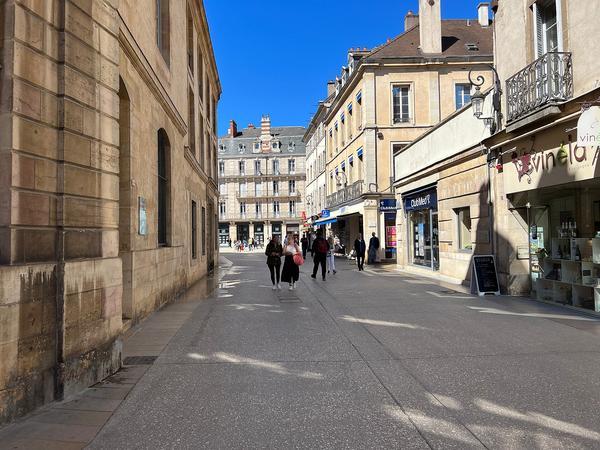 Rue des ForgesA pedestrian street in the historic centre, with stone façades and shops: a first walk in French.
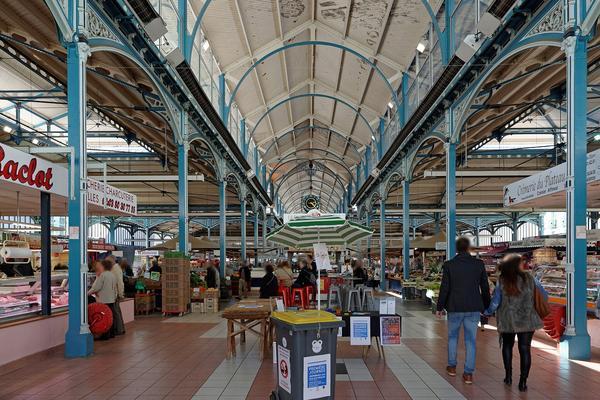 Les HallesThe covered market hall: stalls to name, prices to ask and a good place to try your A1 sentences.
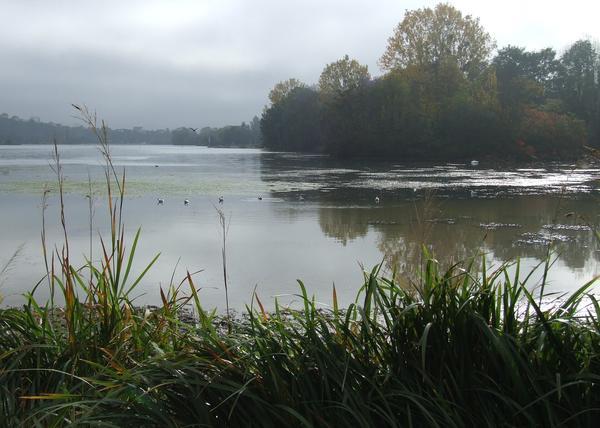 Lac KirA lake with a grassy bank and playgrounds, on the edge of the city: room for the children to run.
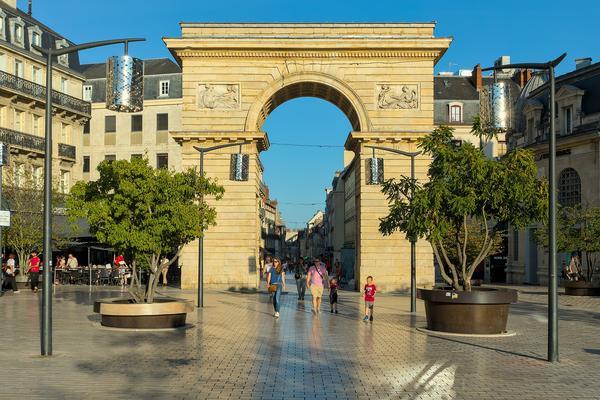 Porte GuillaumeA stone gateway at the edge of the old centre, a landmark on the way to the Place Darcy.
On the Montmuzard campus
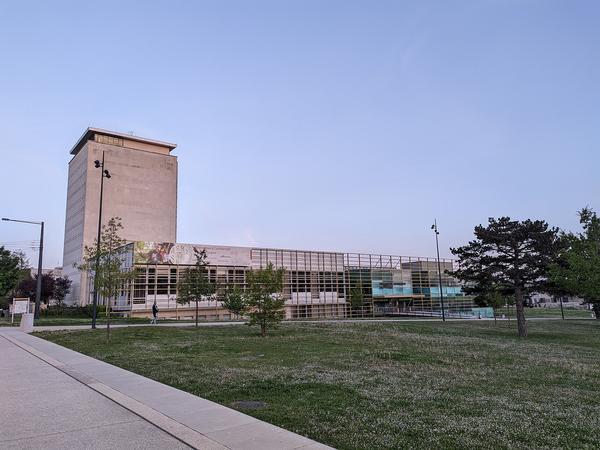 The library on the esplanadeThe Droit-Lettres university library, seen from the Esplanade Érasme where the CIEF has its office.
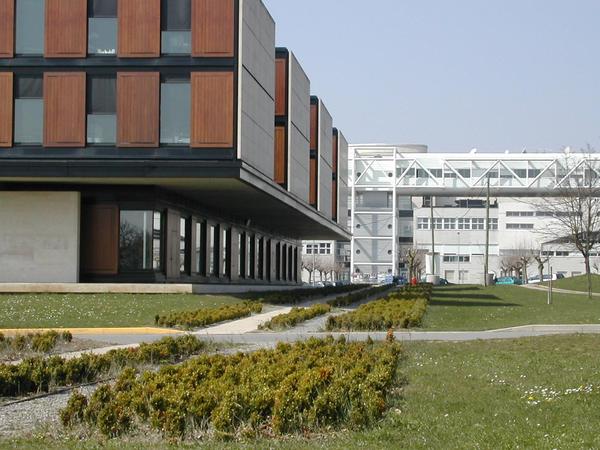 The Maison de l’UniversitéThe Maison de l’Université on the Montmuzard campus, where the CIEF welcomes international students.
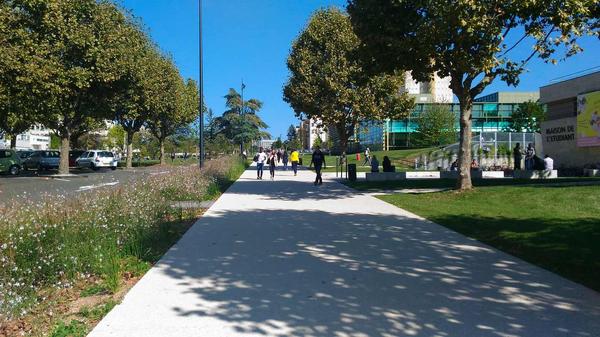 The Esplanade ÉrasmeThe tree-lined pedestrian esplanade linking the university buildings and the tram stop.
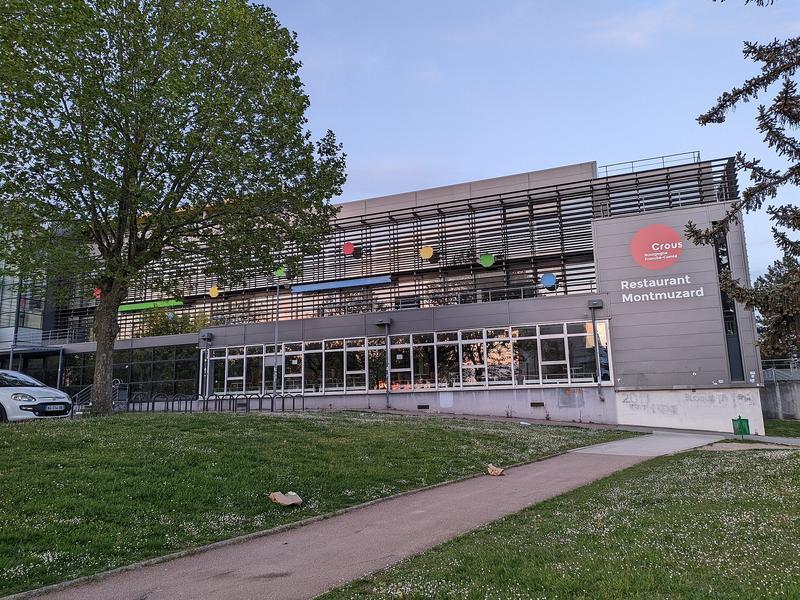 Lunch at the CROUSThe Montmuzard university restaurant, one of the campus services that the CVEC contribution opens to semester students.
Campus photos: Maison de l’Université & Esplanade Érasme © CIEF — Université Bourgogne Europe; library and CROUS © Anon4952 (CC0, Wikimedia Commons).
Find the school
Address
Maison de l’Université
Esplanade Érasme
BP 87874
21078 Dijon Cedex
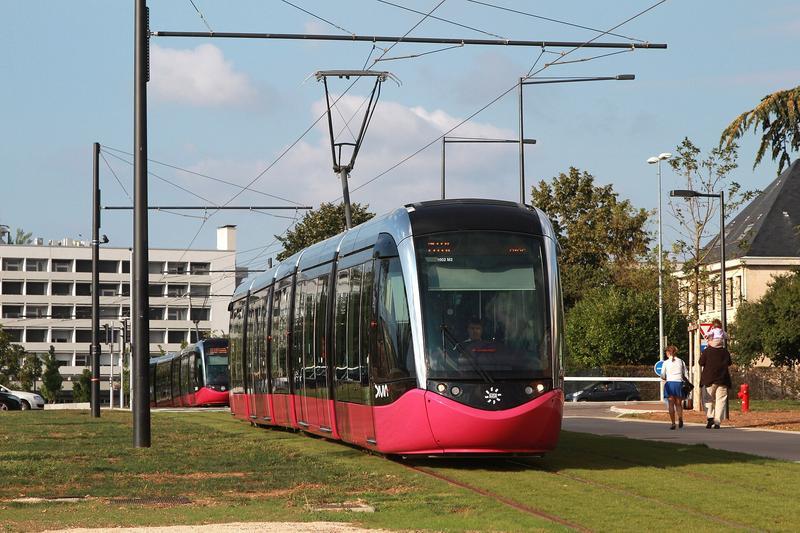
Getting thereTram T1 (direction Quetigny): stops Érasme, Université or Grésilles (the school)· national rules and framework: see our France guides
Before you pay
- What the CIEF publishes: semester courses (French language and culture, DUEF preparation) of 17 to 20 hours a week, €1,515 (€450 registration + €1,065 course) for 27 September 2027 to 21 January 2028 and for 31 January to 26 May 2028; intensive 4- and 8-week sessions at €760 and €1,280 (starting 4 October 2027 or 7 February 2028); summer courses of 2 to 12 weeks, €505 to €1,600, starting 31 May, 28 June or 26 July 2027; an official enrolment certificate issued on receipt of the file and the registration fee, the balance payable on arrival in Dijon, and the possibility to re-enrol at the end of a session; the CVEC contribution, compulsory; DUEF A1 to C2, DELF and DALF centre; no au pair course and no evening course. No commission is paid to AuPair Connect.
- What the CIEF confirms: founded in 1901; official logo and campus photos approved; contact [email protected] (+33 3 80 39 35 60); CVEC and DUEF apply to fall and spring semesters only (DUEF exams in the final week); 2 DELF/DALF sessions a year (March or May, and December); summer sample timetable (20 h/week, finished by 15:00) and 1 free weekday when possible during the academic year.
Why AuPair Connect recommends the CIEF
- A genuine university course: 17 to 20 hours of French and culture a week, with the DUEF diploma at the end, from A1 to C2.
- A historic centre inside Université Bourgogne Europe, a member of the ADCUEFE network of university French centres.
- An official DELF and DALF exam centre, on a campus reached by tram T1 from the station and the city centre.
- Honest about what it is: no au-pair-only course and no evening course, just a rigorous daytime timetable.
Partnership transparency: AuPair Connect and the CIEF are partners, with no commission or payment in either direction. The “Recommended Partner” badge is provided to the CIEF for its website. This page is editorial: fees, dates and terms are those published or confirmed by the CIEF and may change. Spotted a mistake? Write to [email protected].
Ready for your first semester?
The courses, the fee grid and the registration steps are on the CIEF’s website.
Visit the CIEF’s website ↗Keep going
Photos: CIEF — Université Bourgogne Europe (Maison de l’Université & Esplanade Érasme); Wikimedia Commons, free licences: Palais des Ducs: Benjamin Smith (CC BY-SA 4.0); Jardin Darcy fountain: Benjamin Smith (CC BY-SA 4.0); Place François-Rude: Benjamin Smith (CC BY-SA 4.0); tram T1 at Érasme: Cramos (CC BY-SA 3.0); Montmuzard restaurant: Anon4952 (CC0); mustard shop: Benoît Prieur (CC0); trams at Gare: Ketounette (CC BY-SA 4.0); polar bear, Jardin Darcy: Benjamin Smith (CC BY-SA 4.0); half-timbered houses: Ismael zniber (CC BY 4.0); Jardin de l’Arquebuse: Benjamin Smith (CC BY-SA 4.0); the owl of Notre-Dame: François de Dijon (CC BY-SA 4.0); Droit-Lettres library: Anon4952 (CC0); rue des Forges: Chabe01 (CC BY-SA 4.0); Lac Kir: Christophe.Finot (CC BY-SA 2.5); Les Halles: François de Dijon (CC BY-SA 4.0); Porte Guillaume: Benjamin Smith (CC BY-SA 4.0). Official CIEF — Université Bourgogne Europe logo used with the school’s agreement.
Questions
Which course suits an au pair in Dijon?
The CIEF has no course specifically for au pairs and no evening course. It teaches 17 to 20 hours a week, as a semester course (French language and culture, DUEF preparation), as an intensive 4- or 8-week session, or as a summer course of 2 to 12 weeks. This suits an au pair whose host children are at school all day and who wants a real university course and diploma. During the academic year, the timetable depends on the student’s level and class, with one day off per week whenever possible.
How much does it cost?
For 2027–2028 the CIEF lists €1,515 for a semester (€450 registration + €1,065 course), €760 for a 4-week session and €1,280 for an 8-week session (€300 registration + €460 or €980 course), and €505 to €1,600 for a summer course of 2 to 12 weeks. The CVEC contribution (about €105 a year, indicative) applies only to the fall and spring semesters.
Is there a discount for au pairs?
No au pair rate is offered: the CIEF applies the same university fee grid to all students, and this page invents no discount.
Does the course give me a student visa?
An au pair does not need a student visa: she comes on an au pair agreement and the au pair visa. The CIEF issues an official enrolment certificate on receipt of the file and the registration fee.
When can I start?
There are three entry points in 2027–2028: summer courses (31 May, 28 June or 26 July 2027), the 4- or 8-week sessions (4 October 2027 or 7 February 2028) and the semesters (27 September 2027 or 31 January 2028). University Christmas and spring breaks follow the official university calendar.
At what time are the classes?
In summer, the CIEF’s sample timetable totals 20 hours (9:00–13:00 or 9:00–12:00 + 13:30–15:00), all finishing by 15:00. From September to May (17–20 h/week), the exact timetable depends on the student’s level and class, with one free day per week whenever possible.
How many hours can I work if I study?
French rules cap family tasks at 25 hours a week for non-European au pairs and at 5 hours a day, with a full day off each week. Class time is not childcare time: with 17 to 20 hours of class, agree who covers each school run and each evening before you enrol.
Can I take the DELF or the DALF there?
Yes: the CIEF is an official centre for the DELF (A2 to B2) and the DALF (C1 to C2), with two sessions a year: in March or May, and in December. CIEF/UBE student fees (March 2027 reference): €75 (A2), €119 (B1/B2), €168 (DALF C1).
What is the CVEC?
The Contribution Vie Étudiante et de Campus (about €105 a year, indicative) is compulsory only for the fall and spring semesters (not for summer courses or 4-/8-week sessions). It opens university libraries, CROUS restaurants, and cultural and sports activities.
French rules: AuPair Connect guide to au pairing in France, after Service-Public (F13348, F15813). Rules change: legal wording to be reviewed before publication, in particular on the au pair visa and the CVEC. Checked on 17 November 2026.